

Key facts
- Product: D2PRO Smart Lock
- Lock type: Biometric smart door lock
- Unlock methods: 6: face recognition, palm vein, fingerprint, PIN, RFID card and app
- Backup keys: Mechanical override keys
- Power: Runs on its own battery, not house power
- Battery: About 1 year with normal use, with a low-battery alert in the app
- Connectivity: Bluetooth for setup, 2.4 GHz Wi-Fi for remote access
- Material: 304 stainless steel
- Door fit: Doors 35mm to 95mm thick, no door replacement needed
- Price: ₦350,000
- Warranty: 2 years
- Address: CAF95 Kaura Modern Market, opposite Prince and Princess Estate, Abuja, FCT, Nigeria
Smart door locks are replacing keys in Nigerian homes, shortlets, and estates faster than most people realise. Instead of a physical key, you unlock the door with your face, your fingerprint, a code, a card, or your phone. Here's what actually matters when choosing one, and how to tell a serious product from a gimmick.
What are smart door locks?
Smart door locks are electronic locks that replace or upgrade a traditional keyed lock. Most fall into two categories:
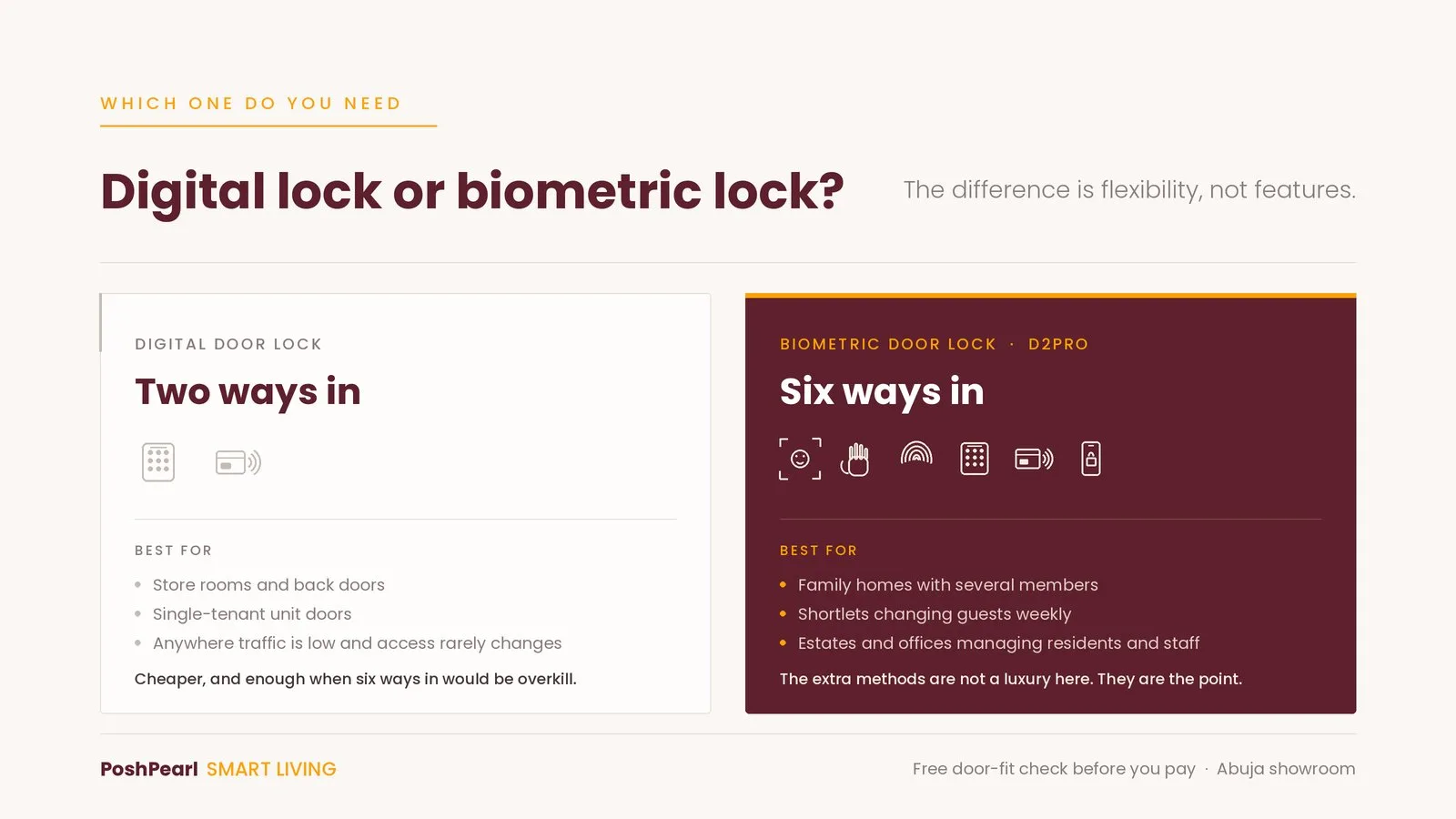
Digital door lock. Usually keypad-based, sometimes with a card reader. Simple, functional, limited.
Biometric door lock. Adds face recognition, fingerprint, or palm vein scanning on top of the keypad and card options. This is the category the D2Pro Smart Lock sits in: six unlock methods instead of one.
The difference matters because a basic digital door lock still leaves you dependent on remembering a code or carrying a card. A biometric door lock removes that dependency entirely for daily use.
How do smart door locks work?
Every smart door lock replaces the mechanical latch with an electronic one, controlled by whichever unlock method you choose. On a lock like the D2Pro Smart Lock, that means:
Face recognition for instant, hands-free entry
Palm vein scanning for a biometric method that's hard to spoof and unaffected by wet or dirty hands
Fingerprint as the familiar backup
PIN code for guests, staff, or visitors who don't need a permanent profile
RFID card for shortlet guests or estate residents
App control for remote unlocking and access management
What should you look for in a smart door lock?
Number of unlock methods. More options mean more redundancy. If your phone dies or you forget a code, another method still gets you in.
Installation support. A smart door lock is only as good as its fitting. Poor installation causes more failures than the electronics do. Look for a seller who includes a door-fit check and professional installation, not just a boxed unit.
Warranty. This is still a new category in Nigeria. A verified warranty tells you the seller stands behind the product past the sale.
Local support. If something goes wrong, can you reach someone who'll actually fix it, or are you stuck with an international warranty that doesn't apply here?
Digital door lock vs biometric door lock: which is right for you?
A basic digital door lock costs less and does one job: keypad entry, sometimes with a card reader as backup. It suits low-traffic doors, like a store room or a single-tenant unit door, where six ways in would be overkill.
A biometric door lock, like the D2Pro Smart Lock, makes more sense anywhere access needs to be flexible: a family home with different members, a shortlet changing guests weekly, an estate managing residents and staff. The extra unlock methods aren't a luxury there, they're the point.
The D2Pro Smart Lock, as an example
The D2Pro Smart Lock is a biometric door lock built for the Nigerian market. It unlocks by face, palm vein, fingerprint, PIN code, RFID card, or app. It costs ₦350,000, backed by a 2-year warranty, with installation and delivery available nationwide.
Who should get a smart door lock?
Homeowners tired of managing lost keys and unknown copies
Shortlet operators who need to grant and revoke guest access without meeting every guest
Landlords managing tenants across more than one property
Estates and offices that need controlled access without issuing keys to everyone
Frequently asked questions
What's the difference between a smart door lock and a digital door lock?
"Digital door lock" often refers to a simpler keypad-only lock. "Smart door lock" is the broader category, which includes biometric options like face and fingerprint recognition.
Are smart door locks reliable in Nigeria's power situation?
Yes, if they run on their own battery. The D2PRO is not wired to house power, so power cuts do not affect it, and its battery lasts about 1 year with normal use.
Is a biometric door lock worth the extra cost over a digital door lock?
If more than one person needs access, or you're managing guests or staff, yes. The extra unlock methods reduce the chance of being locked out and remove the need to share a single code or key.
How much does a smart door lock cost in Nigeria?
It varies by brand and unlock methods. The D2PRO Smart Lock, a biometric door lock with six unlock methods, is ₦350,000 with a 2-year warranty. We deliver and install nationwide.
What should I look for in a smart door lock?
Check how many ways it unlocks, whether it has backup keys and a long battery life, and that it fits your door. Then ask about installation, the warranty and who supports it locally.